* GO TO BOTTOM

Home Info Files Tutorials Comments Droid Admin Only


Measles (Rubeola)

by: Bjhay Olimpo (Admin)


mylogo

Outlook


Roseola is usually not a serious illness. It usually resolves on its own, without complications, within a week or so. With home treatment, symptoms can be managed, and discomfort can be reduced.

Also, the vast majority of children acquire roseola before kindergarten, which protects them against an acute repeat infection later in life.

Background


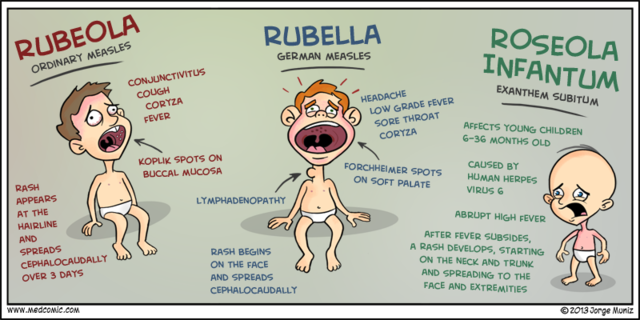
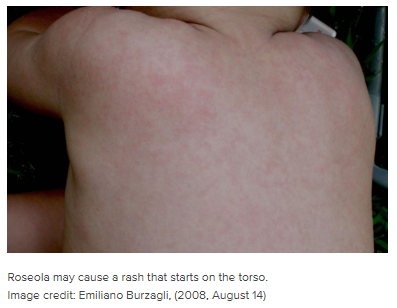
Roseola is a common childhood disease. The cause is primary infection with human herpesvirus 6 (HHV-6). The classic presentation of roseola infantum is a 9- to 12-month-old infant who acutely develops a high fever and often a febrile seizure. After 3 days, a rapid defervescence occurs, and a morbilliform rash appears (see the image below).

Definition


Roseola, also known as roseola infantum or sixth disease, is a viral infection. It usually affects children between 6 months and 2 years of age, with most having had it by kindergarten. Adults are not often affected.

mylogo

Signs and Symptoms (CDC)


fever

runny nose

cough

sore throat.

A rash starts to occur when the fever ends. Roseola is not usually a serious condition. It typically resolves within a week or so after symptoms start.

Roseola symptoms typically appear within 5 to 15 days of infection with the virus. However, in mild cases, symptoms may not be noticeable.

Common roseola symptoms include:

Rash

A roseola rash starts on the torso before spreading to the arms, legs, neck, and face. It appears as small pink spots that may be flat or raised.

Some of the spots may have a lighter ring or halo around them. Roseola spots turn white or fade when pressed with a glass. This rash does not typically cause itching or discomfort and fades within a few days.

However, it is important to note that not all children get the rash.

Upper respiratory symptoms

Some children will develop mild upper respiratory symptoms before or with the fever. These symptoms may include:

cough

diarrhea

irritability

loss of appetite

runny nose

sore throat

swollen eyelids

swollen lymph nodes in the neck

Fever

A sudden, high fever is one of the first signs of roseola and when a person is most contagious. The fever can sometimes reach 105.0°F (40.5°C) and can last for 3 to 5 days.

Risk factors


Most children will contract roseola at a young age. They are at greatest risk between the ages of 6 and 15 months of age when their immune systems have not yet developed antibodies to fight the virus, as this illness occurs upon virus exposure.

A child under 6 months of age may still be protected by its mother's antibodies, which were passed to it, during gestation.

Cause


Roseola can spread between children even when no rash is present, and it can occur at any time of the year.

The condition is caused by a virus, more commonly human herpes virus 6, but also human herpes virus 7.

Diagnosis


Your doctor can confirm measles by examining your skin rash and checking for symptoms that are characteristic of the disease, such as white spots in the mouth, fever, cough, and sore throat.

If they are unable to confirm a diagnosis based on observation, your doctor may order a blood test to check for the measles virus.

Complications


Seizures


Roseola rarely causes complications, with the vast majority of people making a full recovery in approximately 7 days after their symptoms start. When complications do arise, they include:

According to the United Kingdom's National Health Service (NHS), some children with roseola have seizures or fits called febrile seizures. These seizures may occur in children who experience a rapid increase in temperature.

Seizures may cause a brief loss of consciousness, jerking of the limbs or head, and loss of bladder or bowel control.

Although alarming, febrile seizures do not usually cause harm to otherwise healthy children. However, emergency treatment should be sought.

Problems in people with compromised immunity


People with weak immune systems may experience complications if they contract roseola. Examples of groups with compromised immunity include people with HIV and AIDs or leukemia and recent recipients of organ transplants.

If people with weakened immunity acquire roseola, or experience a reactivation of a previous infection, they may develop a more severe case of the illness and struggle to recover from the virus.

Complications include pneumonia or inflammation of the brain known as encephalitis, which can be life-threatening.

Treatment


There is no specific treatment for the illness, but medications and home remedies can be used to reduce discomfort and manage symptoms.

Fluids

It is important to stay hydrated when ill. Children should drink plenty of clear fluids, such as:

water broth

lemon-lime soda

electrolyte solution (Pedialyte)

sports drinks

Carbonated drinks should have the carbonation removed before consumption to reduce intestinal gas in children.

This can be done by allowing the drink to stand for 1 to 2 hours or by shaking, heating, or stirring it.

Over-the-counter medications

Certain pain relief medications may be given to children on the advice of a doctor. Medications to reduce fever include acetaminophen (Tylenol) and ibuprofen (Advil, Motrin). A person should always follow the advice on the packaging, regarding correct doses and timings, or talk to a doctor if they are not sure.

Children under 16 years old should not be given aspirin unless a doctor recommends it. Aspirin use in children has been linked to Reye's syndrome, a rare condition that can be life-threatening.

Antiviral medication

A doctor may prescribe the antiviral medication ganciclovir (Cytovene) for some people with weak immune systems to try to prevent the virus from replicating its DNA.

Antibiotics cannot be used to treat roseola or other viral infections, as they will not work against viruses.

Rest

A person can reduce the discomfort of fever by:

taking a lukewarm sponge bath

applying a cool compress to the forehead

using a light bedsheet instead of a heavy duvet

Ice or cold water should never be used as this can cause chills.

Children can return to normal activities once they have been fever-free for 24 hours and do not have any other significant symptoms.

Prevention


There is no vaccine available to prevent roseola. Prevention involves limiting exposure to infected people. For this reason, it is important that children with roseola do not come into contact with other children until their fever has broken.

People who have contact with roseola should wash their hands frequently to avoid passing the virus on, especially to someone who does not have the antibodies to fight it. It is also a good idea to wipe down household surfaces regularly with antimicrobial sprays.

People can reduce the risk of infection by teaching children hygienic practices, such as ensuring they sneeze and cough into tissues and immediately dispose of the tissue afterward.

Also, it is best to avoid allowing them to share cups, plates, or utensils with others to reduce their exposure to infected saliva.

Reference: https://www.medicalnewstoday.com/articles/320357.php

FACEBOOK PAGE

Time and Date: 06/13/26
Your Country:
Your Browser: Mozilla
Now Online: 1
Your IP: 216.73.216.104
Daily Visit: 2
Monthly Monitoring: 3
Total Visitor: 72
Subscribers: 2
Members: 0
Guestbook: 1

Text Me thru SMS

* GO TO TOP

XtGem Forum catalog